“I was completely amazed by your family history of the house, loved all the paintings.
The whole experience has been amazing.”
Parnacott’s Past - 1800’s
Established by an Andrew Vowler as a farm during the reign of Queen Elizabeth I, Parnacott evolved over successive generations to become a country gentleman's estate. (That of my great-great grandfather, John Vowler J.P.)
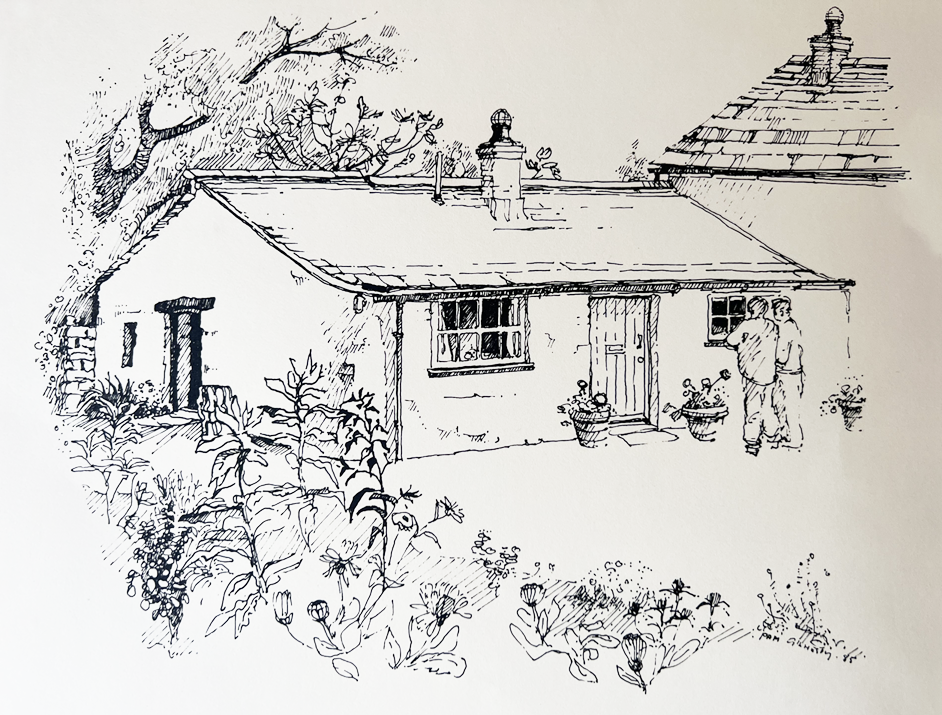
Parnacott or Peter's Cottage dates back to 1580 and is built of cob which uses stone as its foundation.
Throughout the centuries the house and grounds were upgraded and expanded .
Parnacott started as a small cob-walled cottage, one up, one down, soundly roofed in Delabole rag slate.
As the family prospered, about half way through the 17th century, was added to in the shape of a quite large, very solid Devon cob farmhouse.
(Recently, I have been told that the Cottage may well originally have been thatched.)
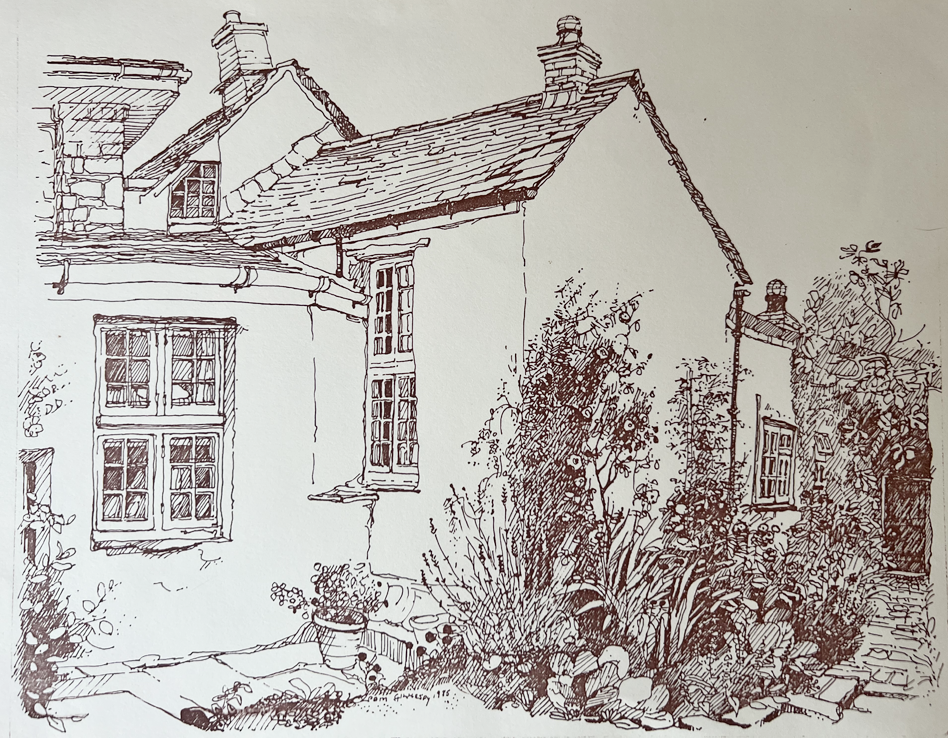
It is likely, given its quite prominent position on the upper reaches of a low hill and plentiful supply of well water and wood.
Parnacott was the site of a dwelling that predates the cottage we now retreat to when letting the 'big' house. (A Parnycot existed in 1306.)
I suspect, being relatively close to Thorne Manor, which was listed in the Doomsday (Domesday) Book that there was a dwelling here back in the 11th Century.
The Name
‘Parnacott’
Parnacott, or Parny's dwelling, may well be derived from the name 'Pearn' - Peter in English. In Greek Peter is Petros. Petros takes us back to 'petra' , Greek/Armenian, which means rock or stone.
The word Cot or Cott means a small cottage or homestead. Over time Cot or Cott became associated with a farm, usually a larger one.
The place name 'Parnycot' dates back to at least 1306. Family records suggest this was the first version of what would become Parnacott. From this I get Peter's Cottage.
The 17th Century central farmhouse was also constructed from cob on its traditional foundation of stone.
Parnacott sits on raised ground with ample amounts of stone beneath its feet so sourcing and mining the rock was straight forward. An old quarry can still be found on the property.
The family likes the idea of Parnacott finding its name with all these elements coming together in harmony.
'Gentrification'
Towards the end of the 18th Century, John Vowler, my great great great grandfather, began the process of what's now known as 'gentrification'.
As Parnacott grew from its farming roots into a gentleman's residence.
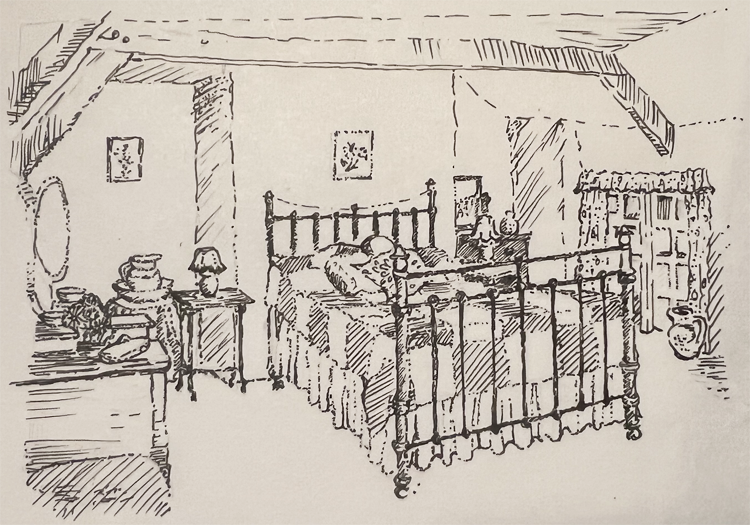
(c 1600’s. Many Vowlers must have been born in this room.)
His eldest son, also known as John Vowler, completed this transition working with his father to create Parnacott as we now know it.
John Vowler J P was also a Deputy Lord Lieutenant of Devonshire.
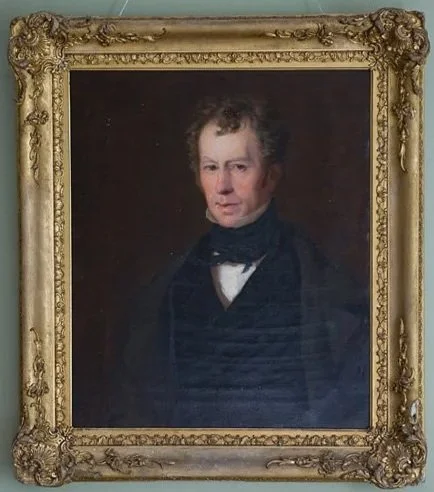
He was apparently the last J P in England to sentence anyone to sit in the stocks.
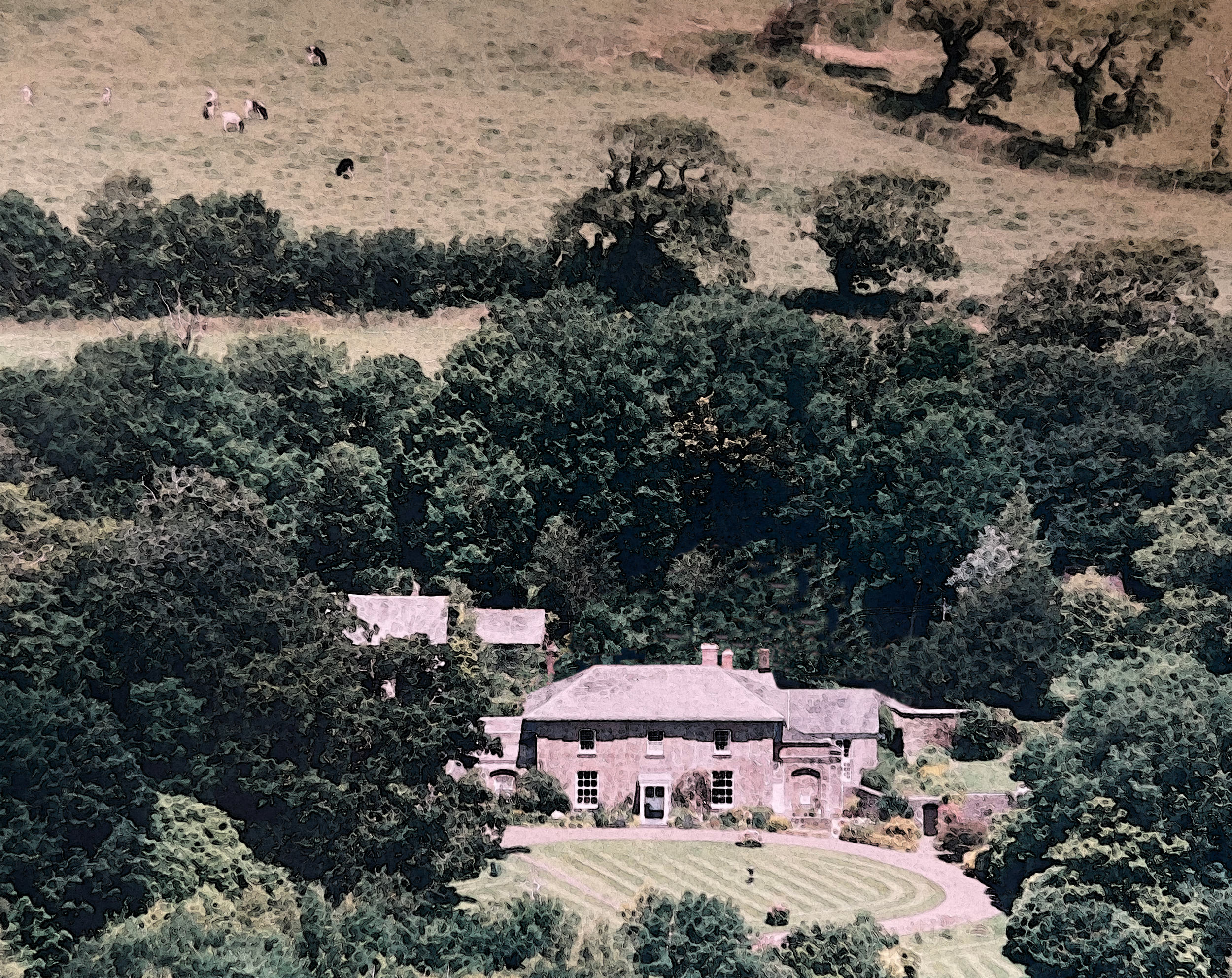
The late 19th Century and early 19th Century saw Parnacott prosper; further land was acquired and wealth accumulated.
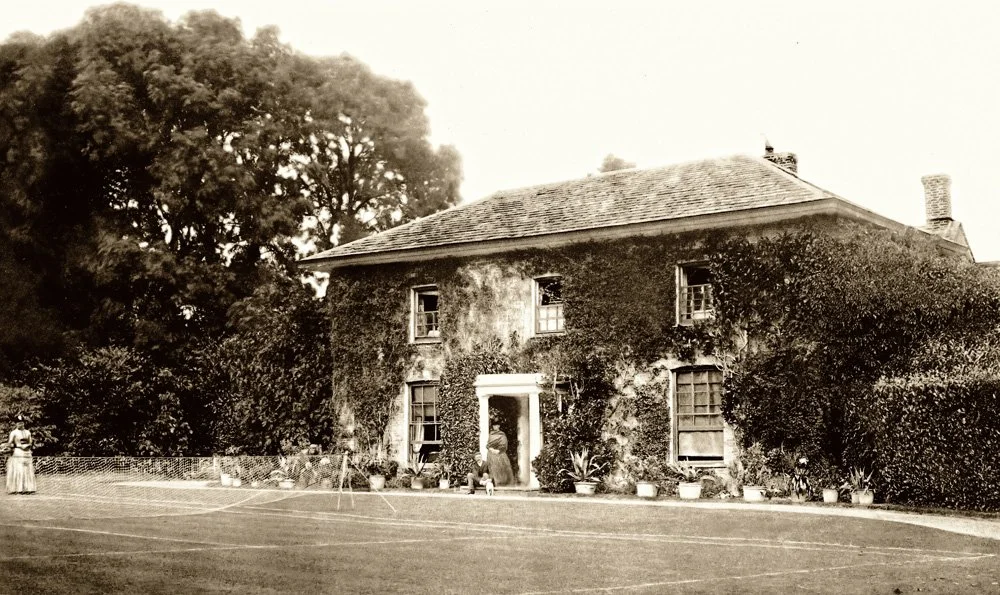
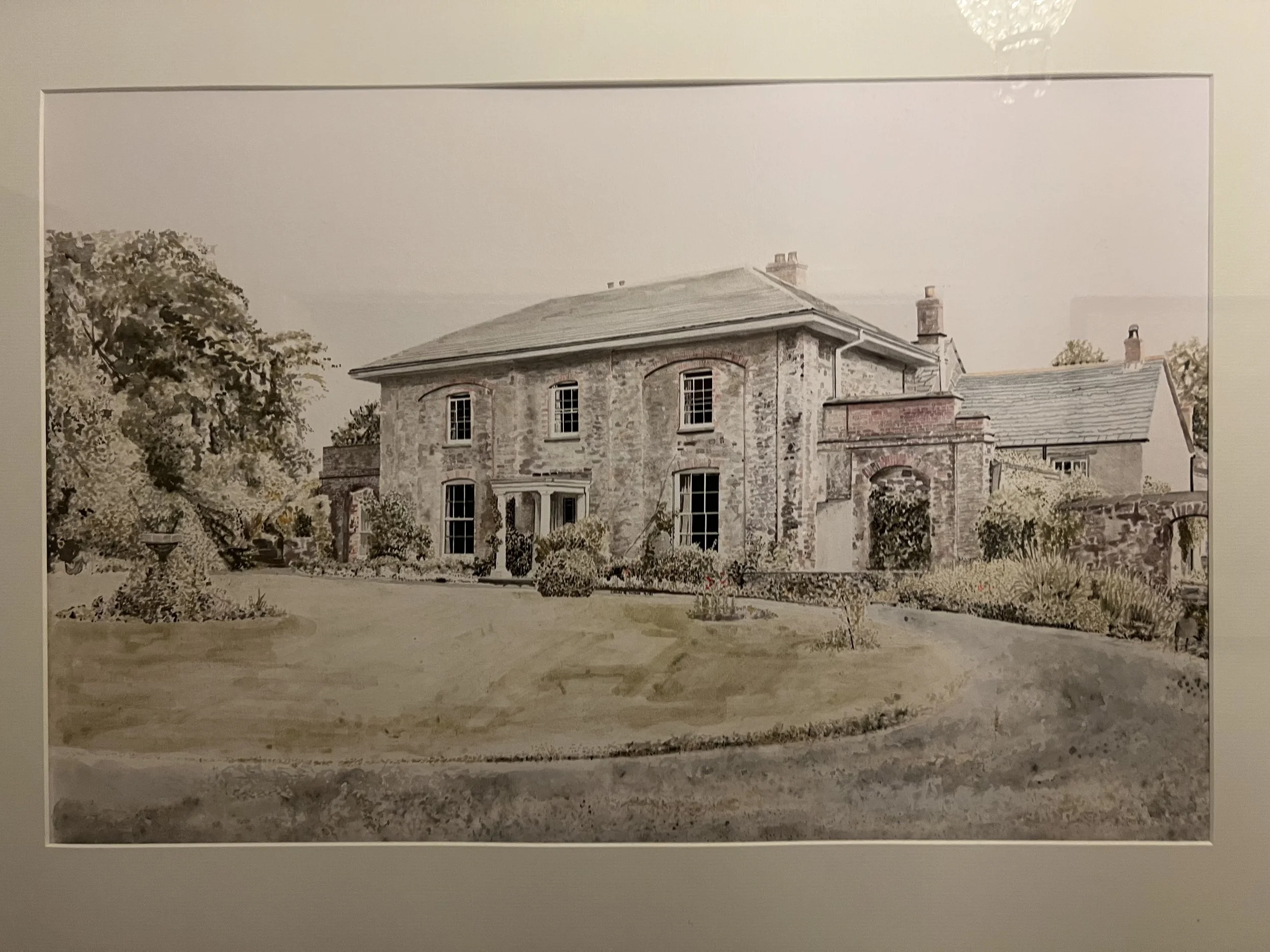
In 1818 the rather handsome Georgian front was started, reaching completion in 1820.
Additional rooms were added at the back of the central building.
My 3 and 2 times great-grandfathers were responsible for all these improvements.
In Parnacott's heyday it comprised 3 farms with about 1000 acres, plus additional properties in Chilsworthy and the surrounding area.
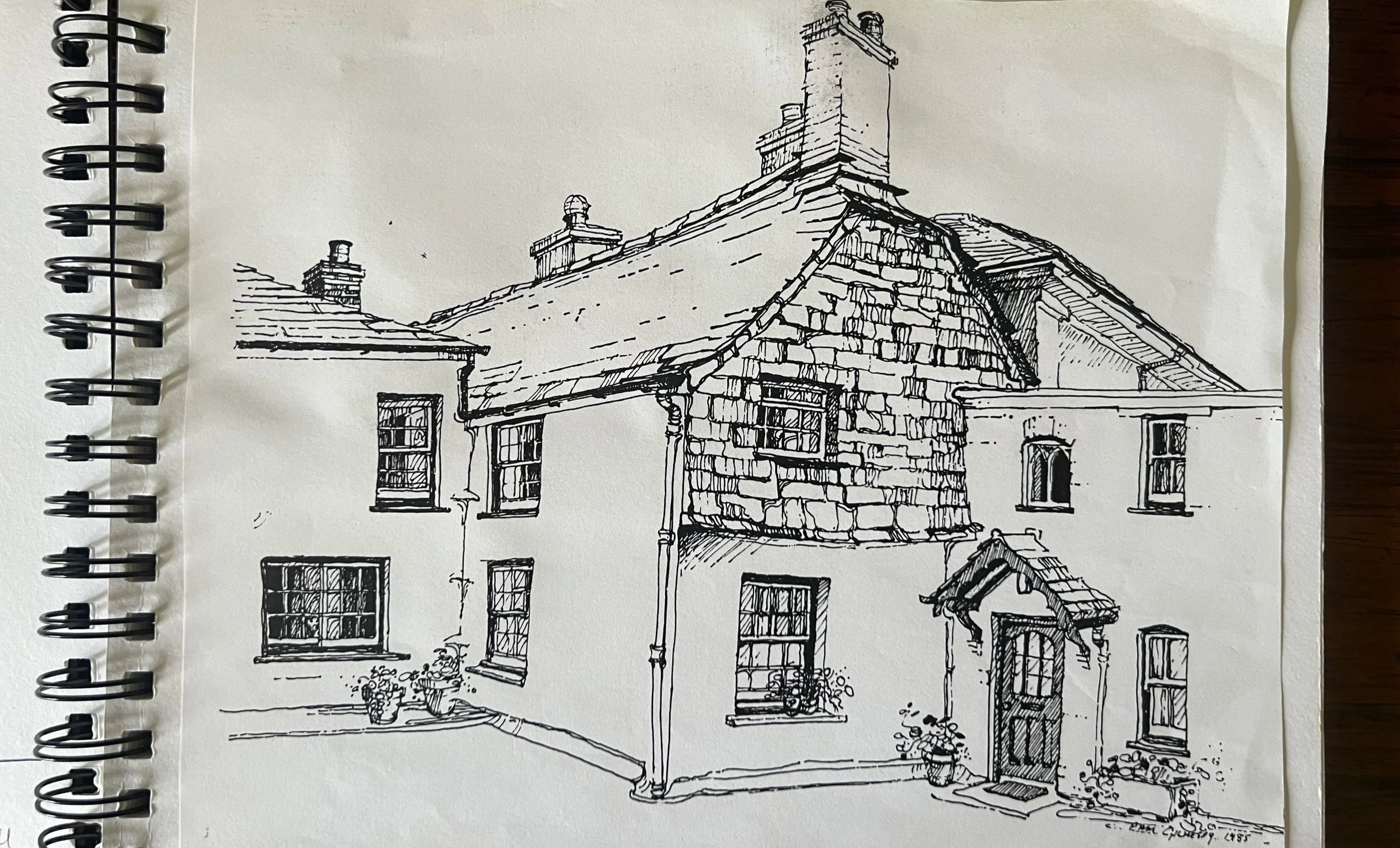
The Victorian Vision
The flat roofed Victorian section can be seen, marking the arrival of bathrooms!
This section, known to us now as Creed Wing, completed the family expansion of Parnacott House.
The 1840 Tithe map depicts many additional farm and garden buildings - now all gone.
My great grandfather, John Nicholson Vowler, married Mary Northcote Simcoe, grand daughter of John Graves Simcoe.
John Graves Simcoe, the First Lieutenant Governor of Upper Canada & was the founding father of Ontario.
He chose Fort York as its capitol, now Toronto. (Canada)
He is a 3 x great-grandfather of mine - JPCV
John Graves Simcoe

Simcoe - Wearing the new Green Queens Rangers uniform
He chose a green uniform for his men, which later would become the uniform of The Rifles.
He wrote a new training manual and I have no doubt that his innovations, especially in the use of light infantry.
He helped pave the way for future military success during the Napoleonic wars.
He was later promoted to the rank of General.
One of his most noted achievements was to institute English Common Law and Trial by Jury.
In 1793 the Law Against Slavery was passed - ground-breaking legislation.
Simcoe's term of office was an outstanding success.
In action during the American War of Independence, Simcoe proved himself as one of the two or three most consistently successful of British regimental commanders.
He was promoted to Lieutenant Colonel of the Queens Rangers, a 'light' unit combining horse & foot.
His emphasis on physical fitness, rapid movement and discipline in the field was inspirational. (His portrayal in 'Turn', U S tv drama, is factually incorrect and, to my mind, highly insulting.)
He is still modern day Ontario as its founding father.
COAT OF ARMS
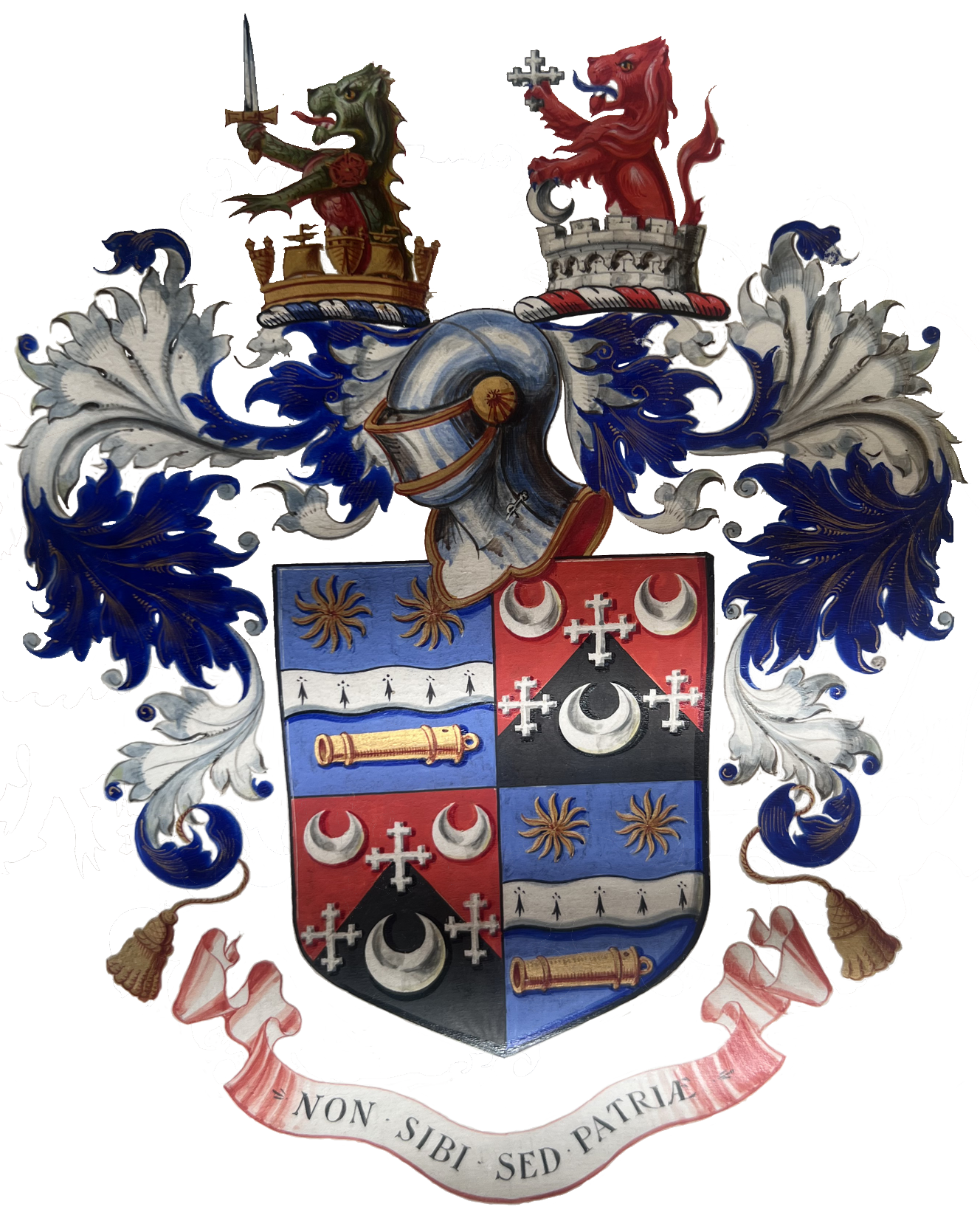
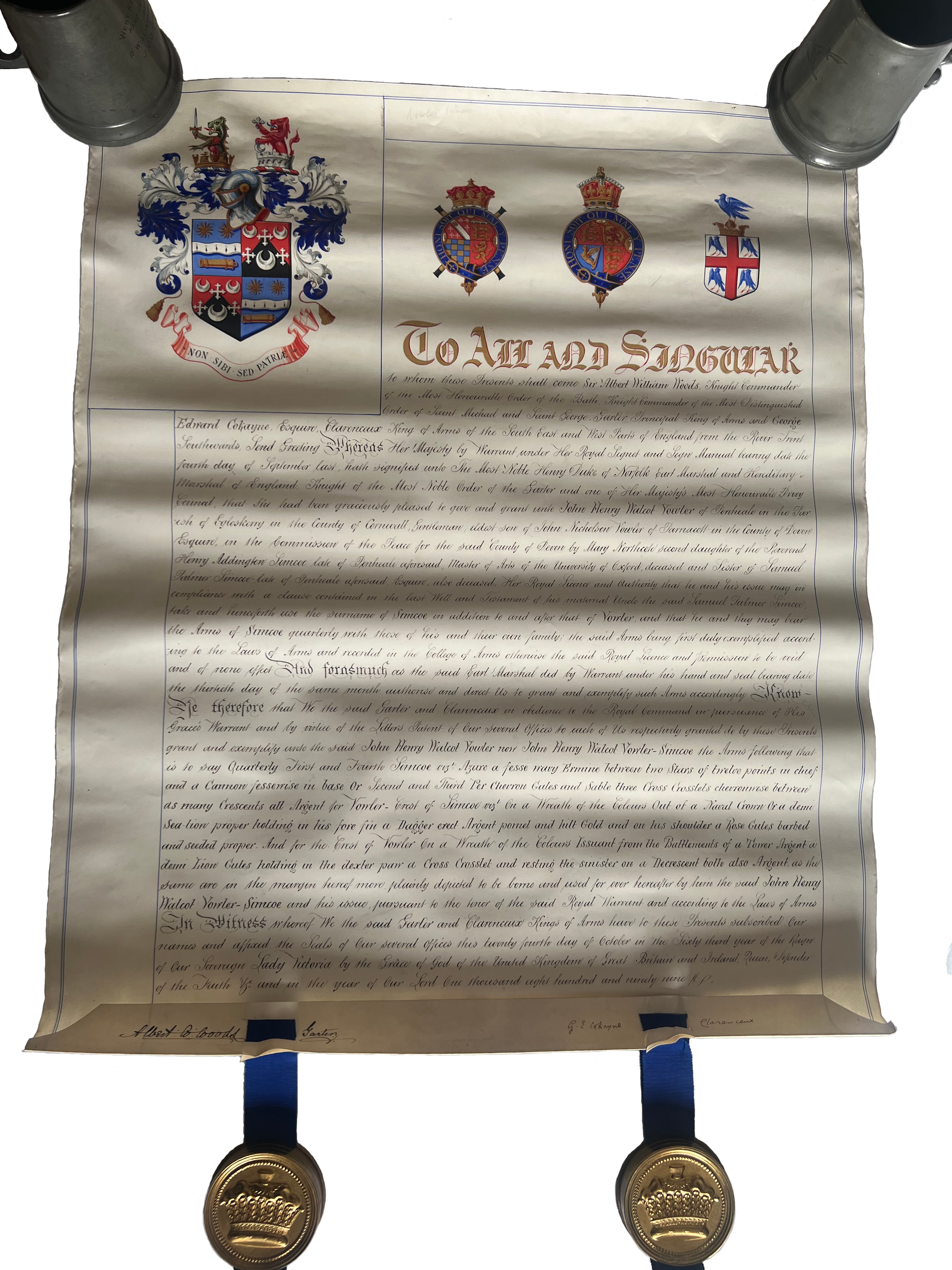
The shield depicts the quartering of the Vowler and Simcoe arms.
By 1800 John Vowler had his own Coat of Arms. The Vowler lion is holding a cross; the family motto was 'Labore et Virtute' - Work and Virtue.